We talk all about more on Education.....

Showing posts with label HPSS. Show all posts
, , , , , , , , , , , , , ,

Impact Projects - Prototyping an innovation project


HPSS has prioritised project learning from day one. Inspired by the likes of The Met School, High Tech High and Albany Senior High School we decided very early on that projects would be an important part of our curriculum design and to that end Learning Projects became one third of the HPSS curriculum story.
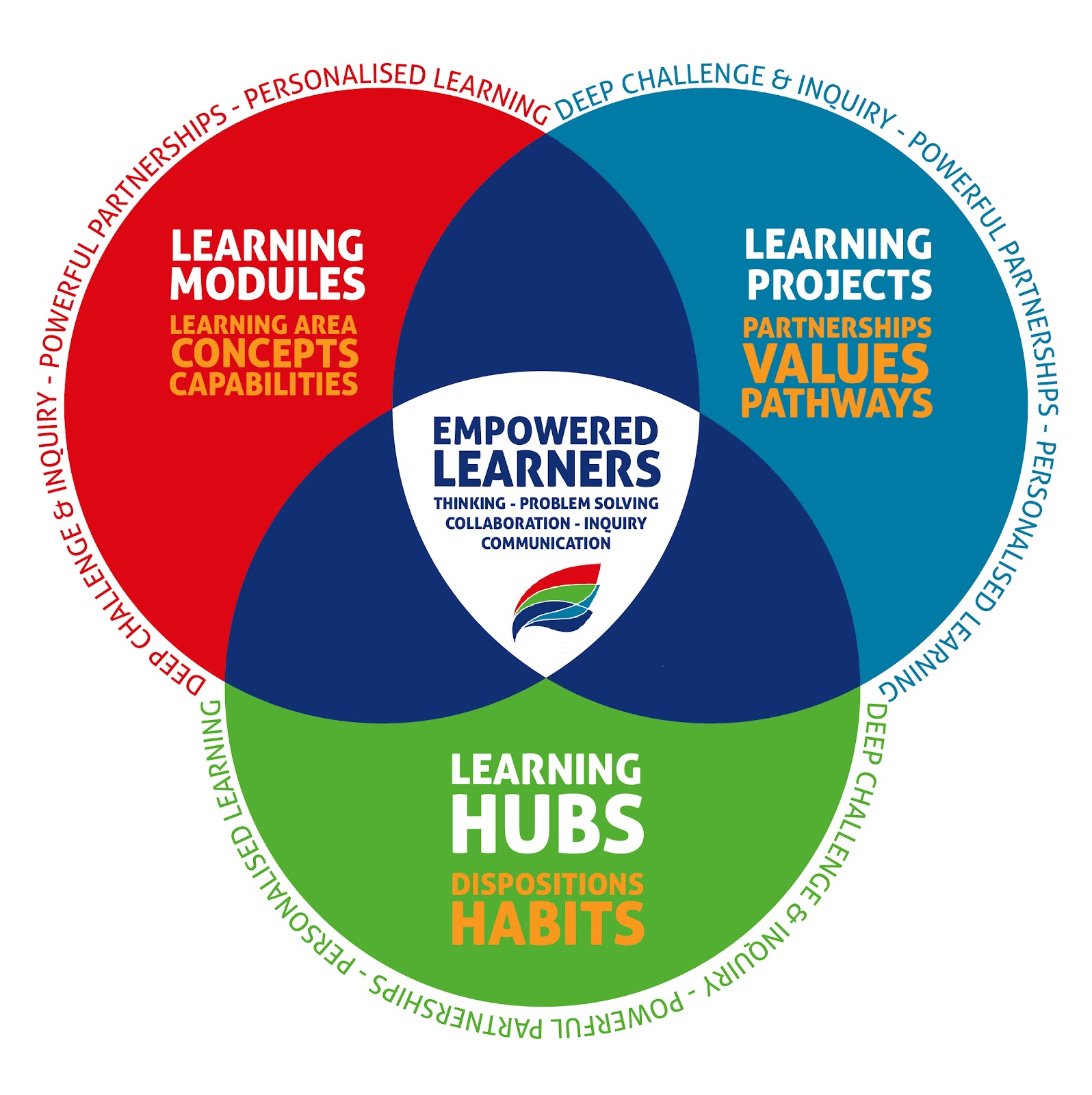
Connected Learning Design.jpg
HPSS Curriculum


Learning Projects evolved over the last five years (first led by Sarah Wakeford and more recently overseen by Liz, Jayne, Rebecca and Cairan) to become a differentiated range of offerings including Big Projects (more teacher led projects aimed at Years 9-10), Impact Projects (more student led projects based on the ASHS model) and Pathways Projects (aimed at Years 12-13 with a focus on pathways beyond schools such as gateway, work experience and tertiary studies). Whilst the focus may change there is a common learning design model and framework that underpins them all, with students going through a kick off phase, planning, action, review and finally showtime. 

Final.jpg
Projects at HPSS

This year was my first year as a Project Guide and I have to admit, it has proven to be a real highlight, proving the hunch I have long held that project learning is one of the very best ways for students to develop key competencies or what we might refer to as 21C skills. It also provides the mechanism for deliver what can feel like an arbitrary edu buzzword - STEAM learning. For me STEAM is less about students experiencing Science, Technology, Engineering, Arts and Maths (because less face it that is really just the NZC). STEAM is really only powerful when it is genuinely integrated learning framed around solving very real problems or addressing very real issues. There was of course the fact that I had spent much of 2017 dream up a school design (with the planning of the ill-fated City Senior School) that was built around the concept of green innovation projects, or what might be more commonly referred to as social innovation projects. 


So when I had the opportunity to offer an Impact Project I knew I wanted to see how I approach it as if developing an Innovation Curriculum. I began by thinking about what Innovation might look if it were to become a stand alone subject. You can see my initial musings here. I decided that I would be best offering a project that was less about subject expertise (our students choose who they want to work with after experience workshop tasters with each project guide) and more about focusing on supporting students who came with their own ideas and were more in need of a project/innovation coach. 

Here is the project overview: 

The Hatchery - an independent innovation project
Do you have a project idea that doesn’t fit the other project categories??
Are you ready for leading and managing your own independent project?
Do you want to know how to design and create a truly innovative product, service or movement?
Want to learn how to use design thinking processes and agile methodology to make your idea a reality?

Your project may focus on Community, Enterprise and/or Sustainability and may be about people, places or things.

Assessment opportunities will be negotiated based on your project focus. 

In this project you will receive mentoring and support from myself and startup companies from GridAKL in Wynyard Quarter. Students will meet with the residents of GridAKL with an opportunity to get feedback, create partnerships and seek mentoring. There will be an opportunity for students become members of GridAKL’s Tech Cafe which will enable to attend workshops and events. 

There will be an application process where you will need to pitch your project idea to Claire and and potential project mentors.

Futures Thinking and Foresight
We began the process with an introduction to future's thinking and the concept of foresight with students exploring the possible futures of work, money, medicine, transport and fashion. Like with anything, students do't know what they don't know, so it is important to broaden their horizons and challenge their assumptions before refocusing on their interests and projects. 

Innovation Project framework
The main aim of the project was to provide the students with frameworks, tools and protocols which would enable them to transfer their learning to contexts beyond school. In a sense I saw this as a training ground for them becoming entrepreneurs working in somewhere like the GridAKL Startup Hub or Generator. 

After chatting to a range of startup folk I decided there were some key frameworks that would serve them well. The HPSS project process was to be framed by a combination of design thinking and lean startup, with a focus on ensuring the students spent plenty of time within the "problem space" before rushing to the "solution space". Board of Innovation provide a handy summary of this combination.

Source: Board of Innovation
The pitch
The process was kicked off with each student being taught how to develop a pitch deck for their initial ideas. Each student then delivered their ideas to a panel of start up and innovation folk (we had Thoughtwired's Dmitry and James as well as brand strategist Joe Ling and innovation coach Klaus Bravenboer). Their job was to really challenge the student's thinking and to encourage them to hold their initial ideas lightly. After this student's went back to the drawing board to completely rethink or redevelop their initial project concepts.


Innovation strategies and protocols
After that we worked through the following phases and processes:

Planning  - Students researched and assessed a wide range of planning tools. Students then developed gantt charts to map their overarching timelines and used calendars and/or kanban to plan week to week.

Empathy Mapping - students had to interview and discuss ideas with a range of potential stake holders.

Prototyping - Students then moved on to prototyping and fleshing out their ideas via sketches, storyboards or lean canvas templates. 

Partnerships - The students and I called on a whole raft of connections to partner each project with a project partner or mentor. Mentors include Previously Unavailable who have taken in Ria as an intern (her project is focused on her becoming an Innovation Coach). Mia is working with Changing Minds' Tamara Waugh to help develop her online platform supporting teen mental health. Whilst this has been time consuming, establishing these connections is what seems to elevate the projects beyond "school projects" into something way more authentic. It also teaches students to be accountable - a super important skill to develop!

And alas this is about where I got to with them (as I just finished up at end of Term Two to head to my new role at Albany Senior). So whilst I have planned the rest of the year, I won't be there to see them move into lean startup phase and on to preparation for showtime at the beginning of Term Four.

The Innovation Road Trip
However before I left I did manage to take them on an awesome Innovation Road Trip. The intention of this was to show them aspects of the innovation pipeline or ecosystem we are now seeing evolve in Auckland Central. I firmly believe student need to see these spaces in order to see themselves in them. 

We began the day at University of Auckland's new Unleash Space which positions itself as an interdisciplinary Innovation Hub available to all Auckland Uni students. The space is part makerspace and part student start up co-working space. If you want to see an awesomely set up makerspace, then you need to visit! Also it was great to see students just a little older than ours being supported through their own Innovation Projects. 


We then visited Generator on Madden St and the Mason Bros to see what I refer to as the "enterprise" end of the co-working, entrepreneurship and innovation pipeline. Hugely inspiring to see where innovation projects and entrepreneurship could take them.


We then rounded out the day with a tour and series of talks at GridAKL's Startup Hub which represents a potentially more entry (and expansion) level of that innovation pipeline or ecosystem. A number of GridAKL residents shared their stories and insights and it was awesome to here what they had learned in projects being echoed, i.e. hold ideas lightly, really explore the issue and needs of the customer, user or client and learn to be agile and adaptive in your planning. 


So there you go. 

It is most definitely was a prototype and is most definitely is still a work in progress. I do however already see some real success and believe there is real power in developing genuine learner agency by arming students with frameworks, tools and protocols and then giving them plenty of time to try and fail and try again. I am going to miss my Hatchery students dearly but I know I will keep in touch with many and I also know I will have many opportunities to get amongst projects in my new role as Principal at Albany Senior High School, who in many ways I see as the home of Impact Projects in NZ. Freakin' pinching myself! 


Share:
Read More
,

My HPSS Journey - reflecting on an awesome five and a half years


2013 - De-schooling and re-schooling
2013 was a year that many educators do not get to experience. It was a year of "de-schooling" and "re-schooling". Maurie, Lea, Di and myself were given the most phenomenal gift of time and space to plan and prepare for the opening of Hobsonville Point Secondary School. In those first six months we spent time fleshing out our school vision, developing a set of guiding principles and establishing (with our community) what was to become our Hobsonville Habits. In that time we visited a wide range of schools here (Ormiston Senior, Albany Senior, Unlimited and Hagley) and several schools in Canada and the USA on our grand Edu-tour. Our first stop was Providence, Rhode Island to visit the founding Big Picture School, Dennis Littky's Met School. The second group of schools we visited was all part of the Canadian Coalition of Self-Directed Schools, including Westmount, Mary Ward (Toronto), Bishop Carroll School (Calgary) and Thomas Haney (Vancouver). Maurie and I then went on a second trip with Cyclone to check out an array of "Apple schools" with Nueva School being the particular standout. You can read reflections from those travels here. 

The second half of the year was all about building a fabulous foundation team and getting ready to open a school! One of the real highlights for me was the process we went though in appointing our middle leadership team. Knowing that right disposition was going key, we made all of our applicants come in and work with one another, watching them closely as they had to work on collaborative task that got them to explore ways they could integrate learning areas. This process, whilst possible painful for the applicants was incredibly insightful in terms of seeing who could "walk the talk" and were prepared to be put out of their comfort zone. Another highlight was getting to work with Julia Aitken who worked with us to explore turning our values and beliefs into principles and practice. It's well worth checking out her paper on the topic here. 

2014 - First year of students at HPSS and expanding my horizons
2014 was where we really did get to turn values and beliefs into principles and practice. It was also the year we we got the immense privilege of meeting our foundation students. Plus it was the year of our most simple timetable ever! You will see as the slide deck progresses so too does the complexity of the HPSS timetable!! You can read my intro to HPSS I wrote in February that year here. Our curriculum design for the most part has held true to that first outing, with students doing integrated modules, single subjects (SPINs), big projects and learning hubs. The one thing we did try and then aborted was the idea of a "big module" which integrated three subjects with three teachers working alongside one another. Unfortunately this resulted in one subject/teacher often feeling like a spare wheel and we discovered genuinely authentic connection across three learning areas wasn't as easy or effective as two. Hence we cut our curriculum losses and refocused on a combo of Modules (two subjects co-taught by two specialist teachers) and SPINs (single subjects with one teacher). 

On a personal level 2014 marked a period of pivotal personal professional growth, starting the year with a keynote at The Festival of Education, getting selected to attend the Google Teacher Academy in Sydney and later that year having the immense honour of being elected as the secondary representative on the NZ Teachers Council. In hindsight each of these events provided something of a catalyst for many of the opportunities (and challenges) that were to follow. 

2015 - The Foundation Years at HPSS and travelling and talking
2015 felt like a year of relative luxury spending time refining our beautifully simple timetable, especially as we decided to teacher our Year 9s and 10s together in a combined programme referred to as the Foundation Years, cycling through a two year programme designed to develop the knowledge, concepts and skills needed to excel in their senior years. It also gave students time and space to move through a singular two year programme rather than cycling through the same same for two years running. This was also the year that we were really thinking deeply about NCEA and what that might look like at HPSS. Early musings can be read here. 

For me this was also a year of continued professional growth. I accepted my nomination and was appointed to the Education Council of Aotearoa NZ, although this did also result in personal challenge and having to ultimately step down from PPTA. A tough choice at the time but ultimately it has felt like the right one, the experience of being a founding council member has been an awesome one - I'm not sure I can even measure the amount of learning I have experienced in this role. I encourage any educator passionate about education to stand for the new council when the opportunity arises. It was also a cool year of travelling and speaking, being invited to speak at EduTECH Brisbane and Learning 2 in Manila. 

2016 - Future Schools and not doing Level One NCEA 
2016 was the beginning of  more complex timetabling, with a second line appearing in the timetable to allow for a seperate Q1 (Level One) programme. It was the year we made the choice to not do Level One NCEA (as a seperate qualification) and was the first outing of the Q1 programme which saw Year 11s doing two (rather than three) integrated modules and two SPINs. This gave students to do less better and only doing 20+ Level One credits meant the focus remained on learning rather than assessment. 

It was another exciting year on a personal level, with the year being book ended by two great PD events - speaking at Future Schools in Sydney at the beginning of the year and attending the somewhat mind altering SingularityU at the end of the year. The latter leading to a most interesting foray into nearly opening a charter school. You can see what I got up to at those events here and here. 

2017 - Q2, ISTP and nearly opening a charter school
2017 was something of a rollercoaster ride both professionally and personally. At HPSS it saw the arrival of an even more complex timetable with Foundation, Q1 and Q2 meaning three lines in the timetable. This allowed for Q2 (Year 12) students to continue their focus on doing less better and having more opportunity to fine tune their learn path. Q2 students do just one integrated module and three single subject SPINs, they also have a choice between Impact Projects and Pathway Projects - the latter allowing students to use project time to engage in  gateway studies, work experience or even tertiary or scholarship studies. 

On a personal level it was an interesting year. SingularityU had discombobulated me to the point where I decided (in partnership with Brett O'Riley) to apply to open a charter school - City Senior School. I genuinely saw this as a chance to establish what I saw as a prototype school of sorts. We applied, we got approved, but alas a change of government saw our contract being cancelled. Note - we have negotiated a trust that will live on, the focus of which will be providing a contestable fund for schools looking to develop innovative initiatives and curricular (watch this space). It was an exhilarating and exhausting journey - it was a huge amount of work and a massive amount of learning, much of which will be just as applicable to my new role as Principal at Albany Senior High School. Another highlight was being invited by the then Minster of Education Hekia Parata to accompany her to the International Summit of the Teaching Profession. Not only did I get to travel to Edinburgh I also had the glorious opportunity of rebutting UK Minister of Education Nick Gibbs who seemed to poo poo everything I (we) hold dear (i.e. skills, tech integration and learner agency). 

2018 - Q3, Innovation Projects and the opportunity of a lifetime!
2018 has been a magic year so far - I can't believe we are only half way through. Firstly, this is the year HPSS sees it's foundation students heading toward graduation. The increasingly complex timetable has peaked and the choice to not to do Level One NCEA seems to have paid off with more relaxed students gaining more Merit and Excellence endorsements at Level Two. Our Q3 programme was born with Year 13 students doing five SPINs (single subjects). In reality the main reason we don't offer integrated modules at Level Three is simply a matter of giving our students as much choice and opportunities to personalise as possible, also ensuring that students can do do the very specific mix of subjects needed for tertiary pathways. 

One of my professional highlights this year has definitely being a Project Guide for the first time. I have had the absolute joy of developing and delivering Independent Innovation Projects also known as The Hatchery. This project group was focused on providing opportunities for those students who had their own ideas that didn't fit with any of the other project groups on offer. It was also an opportunity to trial an approach to project learning that I had been designing in my planning for City Senior School. The main idea was that we would focus on innovation frameworks (such as design thinking and lean startup) and innovation tools and strategies (such as empathy mapping, gant charts, kan ban, agile methodology etc) and also introducing the students to innovation partners and pipelines, visiting Unleash Space at University of Auckland, Generator and GridAKL (aiming to write a more detailed dedicated post about this tomorrow). 

HPSS has been such an incredibly journey. So much learning, so many opportunities to "walk the talk" and learn some more. And there is no doubt that many of the other professional opportunities I have had are a direct result of being from HPSS. At this point I want to acknowledge the amazing people that make Hobsonville Point Secondary School the magic place it is. The students, the teaching and support staff are incredible. We have often joked that to be at HPSS is to be exhausted and exhilarated in equal measure. I believe HPSS is genuinely beginning to reimagine what secondary schooling needs to look like and I can tell you, having lived it for the last five and half year, it is the most exciting and most challenging job an educator can have. Experienced teachers feel like they have their training wheels permanently fitted, genuinely living out what it means to be an adaptive expert. It also takes incredible levels of courage at every level and on this note, once again, I want to aknowwledge and thank Maurie Abraham for showing me what courageous leadership looks like and also showing what it means to lead with a genuine moral purpose. 

And it's having experienced leadership like this that makes me so excited for my next step - Principal at Albany Senior Secondary. In just five days I will experience my powhiri where HPSS will hand me over to ASHS and I have to admit - I am beyond excited! When I reflect on the last five and a half years I realise what an experience and what an education I have had. Thank you to everyone who has been part of the journey. Maurie, Di, Lea and Maliina you are a formidable team - I will miss you dearly. To my critical friends Steve, Jayne, Danielle and all (there are really too many to name) you know you will always be with me! Thank goodness I am only moving the North East Campus. 

I look forward to seeing what adventures and learning the next five and a half years hold.
Share:
Read More
, , , ,

HPSS 5.0 - The Journey So Far

Refining is what we do best!

This week marked my fifth anniversary as Deputy Principal at Hobsonville Point Secondary School and more importantly the first year that we will operate as a fully fledged high school, offering programmes for Year 9-13.

It has been an incredible journey, one that involved an incredible amount of work from an evolving team of committed educators who have not only reimagined secondary learning at HPSS but have influenced changing educational models around the country.

It is heartening to see when we reflect on where we started with students in 2014, that much has remained the same. This was taken from the introduction to the school  which I wrote back in our first week of operation:

HPSS is a co-educational state school located in Hobsonville Point, Auckland. We are a MLE (modern learning environment) which means we are a large open plan school, typified by open flexible learning spaces, break out rooms and specialised learning spaces. The furniture is varied, including high bar leaners, mid-level desks, tables, low tables and bean bags. The space and fittings designed to move from caves, campfires to watering holes. We are also a PPP school which simply means that we have another company managing our property (from maintenance to cleaning) - which means we can focus on teaching and learning!

(Credit where credit's due - the next part is mostly poached and remixed from a range of existing resources developed by the Senior Leadership Team and Leaders of Learning!)

Vision
The vision for our school is to create a stimulating, inclusive learning environment which empowers learners to contribute confidently and responsibly in our changing world.

Principles
The foundations of our curriculum decision-making are to:

  • Innovate through personalising learning
  • Engage through powerful partnerships
  • Inspire through deep challenge and inquiry to develop empowered learners

The curriculum and student week is made up of three key components - learning hubs, specialised learning and project learning.

Learning Hubs
Learning Hubs will:

  • be small groups where caring relationships are fostered
  • provide learners with one key person who will connect with family and ensure learners are engaged in a relevant and challenging programme
  • explore learner interests in order to pursue passions, which can be linked back to learning
  • track progress and provide structures so learners, with their coaches and families, can maintain a learning portfolio
  • build on learners' capacities to be Inquirers and Self Directed Learners

Specialised Learning ModulesSpecialised Learning Modules:

  • will enable all students to gain coverage of curriculum areas and fluencies
  • will include a range of teaching & learning modes: co-constructed, seminar, workshop, flipped, online etc.
  • will encourage critical and creative thinking
  • will be framed by inquiry and involve independent learning activities
  • Learning Coaches will work with the students to create a LearnPath by selecting a range of modules that ensure curriculum and skills coverage. Beyond 2014 students will be able to be placed into modules based on curriculum levels suited to their readiness rather than based on their age.
Project Learning
Students will be engaged in at least one project at any time.
This allows student choice through personal interest and develops lifelong skills of collaboration and complex problem-solving.

Big Projects:

  • are larger scale, links with internal or external expertise/mentors, business partnerships, community links, encourage social responsibility & citizenship
  • apply learning across curriculum areas with focus e.g. Wetlands
  • exposure to wide range of learning experiences, scope for student participation across range of roles

Passion Projects: 

  • individual/team initiated and negotiated interest based projects
  • encourage curiosity, grow passions and achieve excellence
You can read the full post here: A beginners guide to HPSS from 2014

It is heartening to read this and realise that so much of the hard work done in 2013 (when we were lucky enough to have a year to research and plan) really did pay off. Our vision has stood the test of time, the principles have continued to be the touchstone by which we test any new concepts or ideas. But to say the school remains the same would be a total misrepresentation and would not acknowledge the incredible amount designing and refining that has taken place of the last five years.

So what has changed?

Well the timetable has become a bit more complex...

Timetable 2014

Timetable 2018

I would sum up our journey so far, as design and refine. We started our journey with glorious simplicity.

With only one year level we could be completely focused on a single programme of learning. We began with three 90 minute blocks a day which over time evolved into four 80 minute blocks. This allowed us to retain our desire to have time for longer periods of deeper learning, where as the move to 60 minutes allowed for more combinations with the shift from 15-20 blocks.

Learning Hubs began with two 90 minute blocks, then shifted to three 80 minute blocks and this year has returned to two 80 minute blocks. The Learning Hub Curriculum has similarly moved and shifted with the times shifting from My Learning, My Being, My Community to a more complex range of iterations before settling this year on a more refined four pronged focus on WHANAUNGATANGA (Relationships), AKO (Learning to Learn), HUARAHI AKO (Learning Paths & Futures) and MANAAKITANGA (Citizenship & Community).

Learning Modules began their journey as Big Modules (three subjects taught together by three specialist teachers), Small Modules (two subjects co-taught by two specialist teachers) and SPINs (single subject taught by one teacher). Three subjects and three teachers proved challenging with one subject often becoming the spare wheel, this meant we chose to focus on Modules (two subjects co-taught by two teachers) and SPINs still remain. What we have discovered is that different variations of these combinations work at different levels. There four we now offer the following:

Foundation Level (Year 9 and 10 combined) have three Modules and three SPINs with Modules lasting a Semester whilst SPINs swap each term.

Q1 (Year 11 students) have two Modules with more time for each and two SPINs.

Q2 (Year 12 students) have one Module and three SPINs which allows for greater specialisation whilst maintaining one integrated module (both students and teachers agree that integrated learning is on of THE most powerful aspects of learning at HPSS. Connections give purpose and add depth at every level.

Q3 (Year 12 students) has five SPINs with the option of one line being a study block or a fifth subject. The move to single subjects is key for us to be able to offer the level of specific specialisation that is needed for course entry and pathways beyond school.

Projects have morphed from Big Projects (larger scale projects at Year 9 and 10)  and Passion Projects (which were more individual projects) to a three step progression.


In the Foundation Years students still participate in Big Projects. In Year 11, 12 and 13 students may do Impact Projects which tend to be more student led and maybe single students or smaller groups. Year 12 and 13s may do Pathway Projects which might include anything from tertiary study, scholarship preparation or even work experience, with a focus on providing students with a pathway beyond the school gates.

Our Learning Design Model continues to be refined by our Learning Design Leaders and is now embedded across all areas of the curriculum at HPSS. This consistent  use of a common learning taxonomy for all learning objectives has undoubtedly helped our learners to be able to articulate their learning. 

HPSS Learning Design Model
In reality, each and every one of these aspects deserve a blogpost of their own and a shout out to a whole raft of talented educators and the more I reflect, the more I realise there is so much more to share! So rather than try and capture it all here I will do my best to blog a little each week so I focus on each of the areas of HPSS that continue to make it so magic. 

In the meantime, make sure you check our Principal, Maurie Abraham's blog for regular updates and insights and if you look at his 'My Blog List' you can see the many other HPSS teachers that regularly blog about what they and we are up to.

If you want to see just how much we have evolved you could check out these:
Courageous Sharing at HPSS (2013)

And if you wonder how what we do at HPSS might translate in to a traditional school environment you could check out: 
Blue Sky High - five things every secondary school should implement...now 

And check out that Leadership Team!
HPSS SLT - Claire, Di, Lea and Maurie

Share:
Read More
, , , , , , , ,

It's not about our students not being school ready, it's about our schools not being 21st Century child ready

Image Source

In one of the many fantastic staffroom chats I get to have every week at HPSS there is one that keeps coming back to me. Last week I was chatting to my lovely colleague Heemi McDonald (make sure you read his blog) about the growing regularity of school leader meetings I seem to be sitting in on where educators are voicing concerns about increasing numbers of students coming in with more learning needs than before. Principals now more than ever are struggling with meeting the diverse needs of young children and young adults with increasingly complex needs. I myself have engaged in discussion where we have tried to find the source of these "issues". Is it the development in medicine that has seen more premature babies survive who may have experienced all kinds of complications? Is the increased screen time? Is it the sugar and processed food? The increasing amount of time toddlers spend in daycare?? The reasons, and ultimately the excuses, for children not being "ready" are endless.

All to often these discussions end up making me feel uneasy. They feel like (though not necessarily intentionally) that they are looking to place blame on the child and society and fail to ask what might be the real question - is the average school really 21st Century child ready? This was the seed Heemi planted when he challenged me and another colleague during this discussion. It was a genuine light bulb moment.

What are the measures we use when we assess "readiness"? A 2014 Education Review  article outlined school readiness as "Ideally, a Year 0 student should be able to listen carefully to stories, follow instructions, sit quietly on the mat, raise hand to ask a question, put on shoes and jersey, put bag away, wash hands, sit and eat food at break times, pack bag and carry it, and so on." Seems fair enough. When we think of secondary school it is more about expecting a standardised level of literacy, numeracy and self-management. However what we seem to be presented with is increasingly complex issues ranging from poor hand writing, struggling to sit still, possible dyslexia through to behaviours associated with autism.

Or are we?

On one hand it seems to me that we are "diagnosing" students more than ever. I have been an English teacher for 20 years, and whilst we have always got students to do a bit of writing and maybe some close reading on entry, this was mostly skimmed over by some teachers and used to pick out the students who might have been directed into a "supported band" and some some ludicrous "top band". We are now entering a period where all educators are expected to be in constant state of inquiry, scanning, diagnosing and designing individualised interventions to ensure we are all getting our Vygotsky on and ensuring all learning  is in the "zone of proximal development". Therefore, I have a hunch that part of the issue is that we now know and try to do more and therefore feel overwhelmed with who walks through our school doors. And unfortunately few, if any schools are using technology well to support this. This is could be a really interesting thing for us to focus on when talking about school resourcing. I believe this government is absolutely open to increasing funding of schools, they just need some serious data about where and why we should be prioritising the spending.

My second hunch is that a big part of the issue is that business (school) simply no longer meets the needs of the customer. It is not hard to find examples across many other industries of the many companies who have failed and folded as a result of not evolving quickly enough to meet the customers needs, such as Kodak who failed to respond to the digital revolution. The challenge for educators is that we are not a business, with businesses the failure is transparent as customers simply stop spending their money. With schools we are increasingly being lulled into a false sense of security. We don't physically lose customers because are an incredibly handy social construct - i.e. schools provide incredibly cheap and reliable babysitting and teen wrangling services. Students are not going to stop going to school because the produce or service are no longer fit for purpose, they are simply going to appear like they don't fit school, they are going to become harder to engage and possible even find it harder to succeed. We may not be physically losing customers, but I would argue that we are losing them on a mental and emotional level.

THE CHILD IS NOT THE PROBLEM. THE SCHOOL IS.

And before you get huffy, note I am not placing blame, I am simply making an observation. I am not placing blame because I recognise that meeting the changing demands of our young people is bloody hard. particularly when we have remained unchanged for such a long time. And it is beyond hard if you don't have a leader who appreciates this as a issue or as a challenge and/or you don't feel like you have the resourcing to make the necessary changes. Also we all need to have the smart tools that can may diagnostics and interventions more manageable. Heck I know many a change leader who struggles even when they have the vision required to evolve education.

But that said the most important tool in all of this is the teacher, or more precisely, the empathetic responsive teacher. By that I mean a teacher who simply believes each and every student is "school ready", simply by virtue of being present. The empathetic responsive teacher relishes the new literacies and the new capabilities that the 21st century child brings and is accepting of the challenges and differences they might also bring. So what if they aren't engaging in schooling in the same way that kids did five, ten or twenty years ago. Why the hell should we expect them to? I mean if I was a teenager now and forced to experience experience an education that felt like the high school equivalent of having to watch Phillip Sherry TV1 News  every single night I'd be disengaged as well!

So if these hunches are true, what now?

In the short term I think we and in particular our school leaders needs to shift our perspective. Really asking ourselves - What is school for? Who is school for? Is what we are serving up actually fit for purpose? Then secondly, in longer term, I think we need to develop a clear vision of what a genuinely "fit for purpose school" (by that I mean what the students REALLY want and need, not a crusty academic's vision based on undoubtedly outdated mental models) and develop a detailed case for precision funding based on targeted professional development and genuinely smart tools for diagnostics and genuinely smart learning management systems that have inbuilt 21 century instructional built into it. I also think we can then make a real argument for funding reduced contact hours, especially if we have the smart tools that can demonstrate how we are using those non-contact hours to design genuinely personalised learning for every learner. I want to know what IBM Watson might look like in education? Imagine what our Spirals of Inquiry or Teaching as Inquiry could become! Bloody exiting times we live in.

I look forward to diving deeper into this thinking as I spend my coming week in Edinburgh at the International Summit of the Teaching Profession. You can follow the tweets here or by following the hashtag #ISTP2017.

I am also keen to hear your thoughts, your hunches and your solutions. I am keen to hear what you think it might take for teachers to not feel overwhelmed and to simply be an empathetic responsive educational leader and teacher.
Share:
Read More
, , ,

SECTOR VOICES: The Future of Education - Navigating the space between educational paradigms

This post was originally published in Education Review: SECTOR VOICES 2015


One of the toughest things about being a champion for educational change is that you need to take people with you. In fact sometimes it is even tough to take yourself along for the ride.


Many times I have written and spoken about the need for educational change. I know I am not a lone voice, in fact I get the sense that there is a veritable tsunami building up behind what initially felt like ripples and then waves of educators talking about this very issue. People like Sir Ken Robinson have popularised the notion that schools need to change with his TED talk ‘How Schools are Killing Creativity’ and ‘Changing Educational Paradigms’. This was echoed and reinforced by the work of Sugata Mitra with his ‘Hole in the wall’ project and his TED talk ‘Build a School in the Cloud’ and I know we all cheered for that Logan LaPlante for whom Hackschooling made happy. Locally we have a growing number of educational leaders calling for change with NZCER writing an excellent report ‘Supporting future-oriented learning and teaching - a New Zealand perspective’ and just this year we saw the official launch of Dr Jane Gilbert's AUT Edge Work - Educational Futures Network. I am also proud to be part of school and team at Hobsonville Point Secondary School who are developing different approaches to secondary schooling that can better meet the needs of our learners in the 21st Century.


I don't actually think the challenge is understanding why we need to change education or even what we need to do in order to change it. For me, the central challenge is that we appear to be a bit stuck in the space between. The space between education's past and education's future. I suspect this period will be looked back on as that uncomfortably pimply pubescent period where we transitioned, painfully and unnecessarily slowly, from an industrial age education system to a more agile knowledge age model. But at present, we are neither there nor here. Actually who am I kidding. Plenty of people are still back there. And happily so. Some of us have hurled ourselves into the unknown whilst many others have stuck with comfortable old 'there' and are  simply dangling pedagogical toes over the precipice whilst really clinging to the industrial mainland.


All around us are examples of businesses and industries who have made the transition - think about how you used to book travel, book a taxi,  how you used to do your banking or share written communication - there are so many examples of change, because industries have to change, if you don't, you simply lose customers - in business you evolve or die.


However, compulsory schooling doesn't seem to work that way. For many, there is what is perceived as an intellectual argument for change that might make them feel a little uneasy maintaining the status quo. However as long as we have a system where schools can be positively antiquated yet publicly lauded as educational successes for hothousing students focusing on little more than assessment and results results results, then we are unlikely to see any sizeable change in the near future - in recent months we have seen a number of “top schools” quoted in the media, criticising innovative learning spaces as “barns” and new approaches to learning as making our learners “guinea pigs”. Add to this that for many, which school they attend is not their choice, and even if it was, there is so little choice that you are probably limited to choosing between co-ed, single sex and/or maybe religious character or not. Then there is the issue that criteria for a “top school” is so outdated that it seems based on little more than size, decile and league tables combined. In fact the more antiquated the school the more highly it seems to be regarded.


Be a pioneer and make change anyway and you run the risk of being seen as risking student success and making a generation of students “guinea pigs”. Reimagine spaces and you are accused of putting students in “barns” - even if it is an improvement on the cages they came from. Irregardless of the fact that we are all failing our young people in numerous other ways with our national focus on academic results and little else. I actually believe we can move forward and deliver a better educational model AND have our students succeed at qualifications such as NCEA, I just think it's a shame that there is little enticing others to risk making change when the only thing that seems to matter to many are results which quite possibly have little, if any, relevance as an indicator for long term success in the 21st century. Add to this the issue that if we do change schooling we must have the confidence of our students and community and often for parents their only reference point is their own education. Even if they actually didn't succeed in that system or even enjoy it, they are hugely nervous if we depart from a traditional school model and what the school down the road is doing. So as well as working hard to change and improve educational models we also have the additional job of translating and public relations, "selling" one paradigm to those that came from another. This translation needs to occur for the educator as well. I know I have often faltered, knowing full well that we must make the change but at times terrified at the thought of heading off into such a new terrain without a map or guide book. That said, moral purpose can make for an excellent compass if you let it.


Add to this the issue that entering a new paradigm actually requires extra resourcing. At Hobsonville Point Secondary School we are attempting all kinds of creative solutions to try and make future-focused learning happen on a budget and resourcing model that is well and truly based on an industrial Age equation of one teacher to 25-30 students teaching students eight discrete learning areas. I would argue that if our government really wanted innovation they would reward those that are doing it with a different resourcing formula that allowed for greater planning and professional learning to reflect that we are no longer simply serving up tweaked iterations of what we  have serving up in schools for the last 25, 50 or 100 years. Change takes time, effective change takes a whole lot of learning and planning.


Personally if I were “Joe (or Joanne) Bloggs” I would be way less concerned that schools like Hobsonville Point Secondary School are "experimenting" with new approaches and be far more concerned that many schools are not experimenting at all and that in fact they are being celebrating for engaging in damaging, high stress approaches to preparing students for little more that assessment success. That scares the hell out of me.


So what is the answer? I suspect we have to "feel the fear and do it anyway". I mean, humankind didn't create cars, learn to fly or fly to the moon by being safe and happily living in the past. I just hope we can find a way to have more, if not all educators leave the past behind us as well and for communities to demand the change rather than fear it.


Share:
Read More
, , ,

Update on NCEA at HPSS (and introducing the HPSS Qualification Programme)

How NCEA works (from NZQA website)
  • Each year, students study a number of courses or subjects.
  • In each subject, skills and knowledge are assessed against a number of standards. For example, a Mathematics standard could be: Apply numeric reasoning in solving problems.
  • Schools use a range of internal and external assessments to measure how well students meet these standards.
  • When a student achieves a standard, they gain a number of credits. Students must achieve a certain number of credits to gain an NCEA certificate.
  • There are three levels of NCEA certificate, depending on the difficulty of the standards achieved. In general, students work through levels 1 to 3 in years 11 to 13 at school.
  • Students are recognised for high achievement at each level by gaining NCEA with Merit or NCEA with Excellence. High achievement in a course is also recognised.  


See the NZQA website for more details: 


When looking at information around secondary schooling, the various levels referred to can be confusing. As a general rule schools plan around the following levels matching up. It is important to note that whilst a student may be at a certain Year Level according to their age, they may operate at a different Curriculum and NCEA Level according to their progress in any particular learning area, e.g. Student A may be in Year 11 but could be operating at Curriculum Level 6/NCEA Level One for English and Curriculum Level 8/NCEA Level Three in Statistics. Where possible, we will aim to assess students according to the Curriculum Level they are working at.


Year Level
Curriculum Level
NCEA Level
Year 11
Level 6
Level One
Year 12
Level 7
Level Two
Year 13
Level 8
Level Three

Principles guiding our NCEA vision and design

NCEA at HPSS has been guided by a clear set of principles that underpin our school approach to assessment. We believe all assessment experiences should be:
  • Low stress
  • As naturally occurring as possible
  • A balance of personalisation, rigour and high expectations
  • Designed to fit best practice for each learning area
  • Ensure coverage, progression and pathways to personal success

Level One NCEA at HPSS

Foundation Years
Years 9-10
Qualification Years
Years 11-12
Pathway/Launch Pad
Years 12-13+


Year 11 is the beginning of a two year journey (which we refer to as the Qualification Years) where students will work towards attaining a quality Level Two NCEA Certificate. To ensure the students gain the best results we will focus on doing less better - we believe that by doing fewer Achievement Standards we will support learners to go deeper with their learning. During their Year 11 year, students will have the opportunity to gain 20-40 credits at Level One and/or Two to lay the foundations for quality Level Two and Three qualifications. This means HPSS students will not be completing a Level One NCEA Certificate.*
Achievement Standards may be gained in all areas of our curriculum, for example:


  • Projects - Where opportunities arise for genuine, naturally occurring Achievement Standard evidence to be produced, these should be pursued (for students operating at Curriculum Level 6 or 7) in consultation with Project Guides.
  • Learning Hubs - Where opportunities arise for genuine, naturally occurring Achievement Standard evidence to be produced, these could be pursued (for students at Curriculum Level 6 or 7) in consultation with Learning Team Leaders.
  • Qualification Learning Modules / Qualification SPINS - will be designed to provide opportunities for naturally occurring Achievement Standards evidence to be produced. Each module will offer each student a maximum of one Achievement Standard per Learning Area per semester (which equates to 12 Achievement Standards in total)**


Whilst most Achievement Standards will be internally assessed, there may be some externally assessment Achievement Standards offered in Semester Two Modules and/or SPINs.


* Students do not need a Level One NCEA Certificate to achieve Level Two or beyond. 20 credits from Level One can be carried over to Level Two.

** Where a student has a particular strength or passion extra Achievement Standards may be offered.  


Monday
Tuesday
Wednesday
Thursday
Friday
8.30 – 8.50
Staff kitchen table
Community staff kitchen table
Projects staff  kitchen table
Modules
staff Kitchen table
Staff professional learning
(8.30 - 9.30)
8.40 - 8.50
Student Check-in
Student Check-in
Student Check-in
Student Check-in
8.50 – 9.10
Learning hub
Learning hub
Learning hub
Learning hub
9.10 – 10.30
Block 1
Extended Hub
QM 2
Impact Projects
SPIN A
Extended Hub
(9.30 - 10.30)
10.30 – 10.50
Interval
Interval
Interval
Interval
Interval
10.50 – 12.10
Block 2
QM 1
MyTime
Impact Projects
MyTime
QM 1
12.10 – 1.30
Block 3
QM 2

QM 1
MyTime
SPIN B
QM 2
1.30 – 2.10
Lunch
Lunch
Lunch
Lunch
Lunch
2.10 – 3.30
Block 4
QM 2

QM1
Extended Hub
SPIN B
SPIN A


Timetable explanation
Next year we will have a second timetable operating that will create the framework for a Qualifications Programme. Students in the Qualification Programme (Year 11-12) will be able to design a semester long personalised timetable (in partnership with their Learning Coach and whanau). Each student will select two Qualification Modules, two Qualification SPINs as well as establishing an Impact Project.


Impact Projects
Students will participate in one project each semester. These projects will be either be completed in small groups or as an individual. Projects will be focused on a specific outcome/impact that makes a difference. Projects will be increasingly student directed but will continue to be supported by a teacher. Students may stay in Big Projects if they are not ready for Impact Projects.


Qualification Modules (choose 2)
Students will select two co-taught connected modules each semester. Each module will cover two learning areas, but will be connected through a common concept. Qualification Modules will have four 80 minute blocks a week to allow for deep learning. These modules will be pitched at curriculum levels 6-7.


Qualification SPINS (choose 2)
Students will select two SPIN modules each semester. Each SPIN will cover one learning area. SPIN modules will have two 80 minute blocks a week to allow for deeper learning.These SPIN modules will be pitched at curriculum levels 6-7.


Subjects on offer
Next year we will have a wide range of subjects available, including: English, Maths, Science, Visual Arts,  Health and PE, Social Studies, History, Geography, Technology, Digital Technology, Drama, Dance, Languages (including Spanish, Japanese, Te Reo, Mandarin), Business, Accounting and Music. Any subjects not available maybe available through HabourNet (as an online distance learning course).
Share:
Read More